For Developers · Monetization & Growth
Reviews
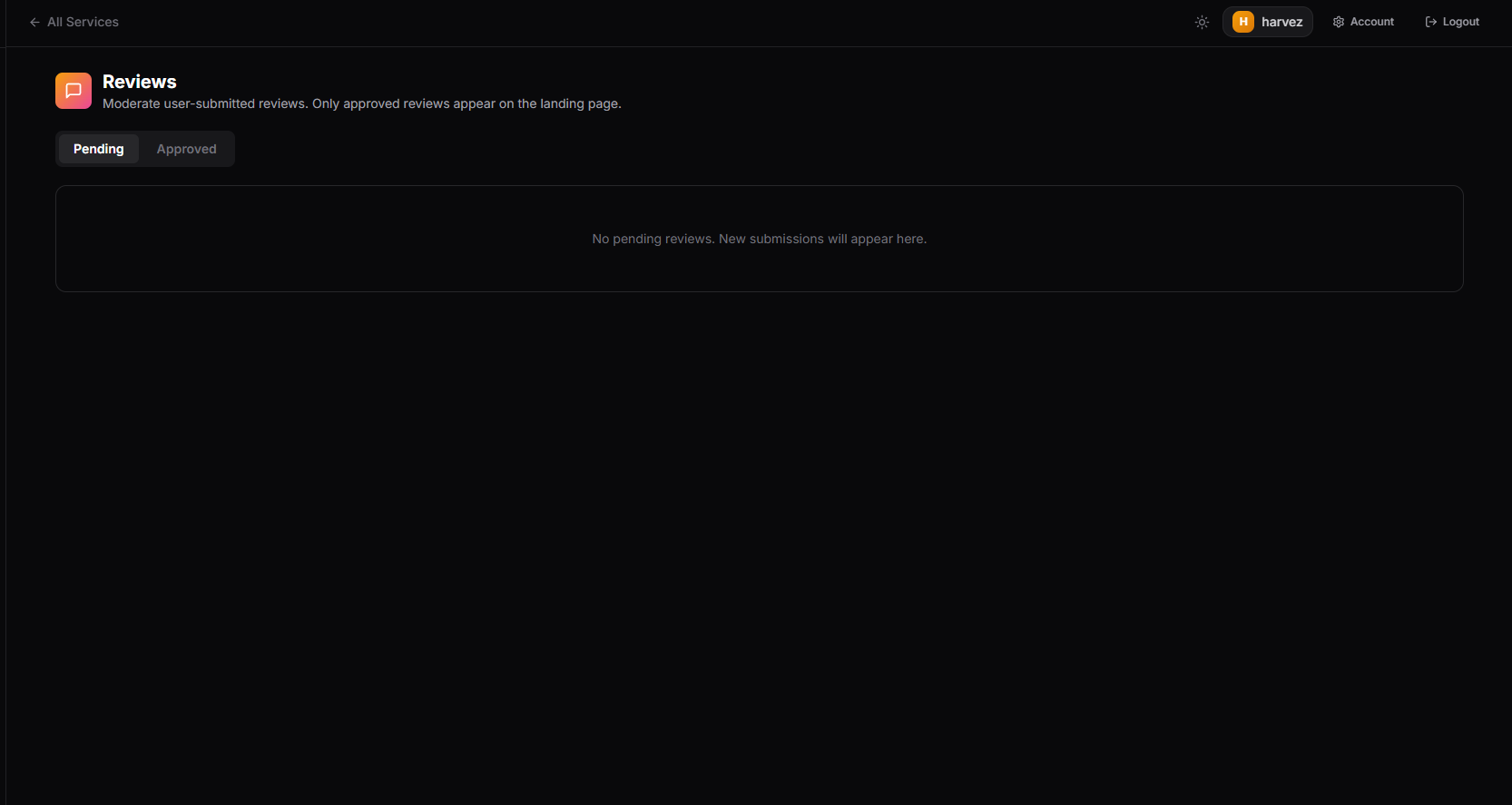
The Reviews tab lets you manage user reviews of your service. When a user leaves a review on your service page, it lands in the Reviews queue first — you decide which ones get published to the public-facing service page. Real testimonials displayed prominently build trust and credibility; spammy or bad-faith reviews can be rejected before they're ever shown.
How it works
Reviews are opt-in publication. Every review users submit comes to this menu first as pending. You read it, then either:
- Approve — the review goes live on your service page and visitors see it as a testimonial.
- Reject — the review is dropped. The user does not get notified that their review was rejected; they will not see it on the page, and you can move on.
Nothing is published automatically. This means you control your service page's reputation — no surprise negative review appearing without your review of it first.
Why this matters
Real reviews from real users do the marketing work that no self-written copy can match. A visitor who sees three or four genuine testimonials at the top of your service page trusts your software far more than one who only sees your own product description. That trust converts directly into completion rate — users who trust the service are far more likely to push through the checkpoint flow to get their key.
Conversely, a spam-filled review section reads as untrustworthy and chases users away. Active moderation through this tab keeps your service page's reputation polished.
When to approve
- The review is clearly genuine. Talks about specific features, mentions a real use case, written like an actual user wrote it.
- The review is positive or constructive. A balanced positive review is more credible than uniform 5-star praise — variety reads as authentic.
- The review is on-topic. About your software, not unrelated grievances or off-topic spam.
When to reject
- Obvious spam. Repeated, low-effort, off-topic, or promotional content for unrelated services.
- Bad-faith negative reviews. Users gaming the system, competitors trying to harm your service, trolls. You can spot these by tone — they're usually vague, hyperbolic, and provide no specifics.
- Personal attacks or harassment. Reviews that target you or other users personally rather than the software itself.
Don't reject just because it's negative
Build credibility, not echo chambers